
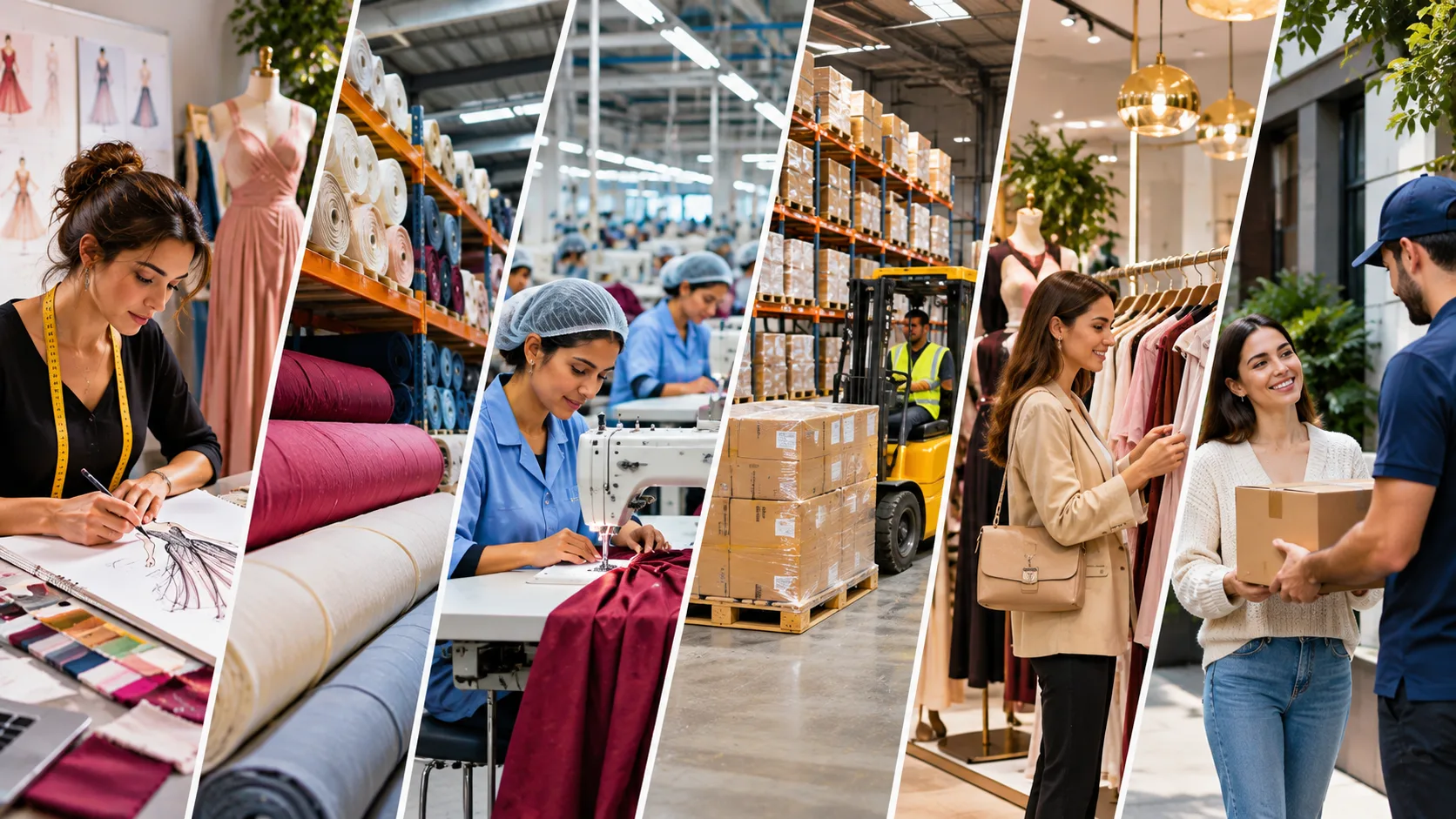
The fashion supply chain is the process that moves clothing from an initial design idea to the finished products available in stores. It involves fabric suppliers, manufacturers, transportation companies, warehouses, retailers, and many other participants. Every piece of clothing passes through several stages before reaching the customer.
Understanding fashion supply chain basics helps explain how clothes are made, priced, distributed, and sold. It also shows why certain fashion items become expensive, why deliveries get delayed, and how brands manage changing customer demands. From luxury clothing to everyday streetwear, supply chain decisions influence the entire fashion industry.
Modern fashion businesses must balance quality, production costs, delivery speed, and environmental considerations. These responsibilities require careful planning and strong relationships between suppliers and manufacturers. This guide explains how the fashion supply chain works, its main stages, common challenges, and practical ideas for making better fashion decisions.
What Is a Fashion Supply Chain?
A fashion supply chain is a network of businesses and activities involved in producing and delivering clothing, footwear, and accessories. It begins with sourcing raw materials and continues through manufacturing, transportation, storage, and retail distribution. Each stage contributes to the final product customers purchase.
Fashion supply chains often involve businesses located in different countries. Cotton may be grown in one region, processed into fabric elsewhere, and transformed into garments at another location. Finished products are then transported to warehouses, shops, or directly to online customers.
The fashion supply chain is important because it connects creative design with commercial production. Without reliable suppliers and transportation systems, even successful clothing designs may never reach customers. Effective supply chain management helps fashion brands maintain quality, control expenses, and deliver products when customers need them.
How Does the Fashion Supply Chain Work?
The fashion supply chain begins when a brand develops a product idea based on customer needs, seasonal trends, or creative inspiration. Designers prepare sketches, select materials, and establish basic product specifications. Purchasing teams then identify suppliers capable of providing suitable fabrics, trims, and other components.
After materials are sourced, manufacturers create samples and begin garment production once designs are approved. Clothing passes through cutting, sewing, finishing, and quality inspection processes. Finished items are packaged and sent to distribution centers or retail locations according to the company’s sales strategy.
The final stages involve inventory management, order fulfillment, and customer delivery. Retailers monitor demand and coordinate replenishment when additional stock is available. Customer feedback and sales data can also influence future designs, production quantities, and supplier relationships.
Main Stages of the Fashion Supply Chain
The fashion supply chain includes several connected stages that transform raw materials into finished clothing. Each stage requires planning, communication, and quality control. Delays or problems at one point can affect the entire production schedule.
The main stages generally include:
- Design and product development: Creating clothing concepts, specifications, and samples.
- Raw material sourcing: Purchasing fibers, fabrics, buttons, zippers, and other components.
- Textile production: Spinning yarn, weaving or knitting fabric, and applying finishes.
- Garment manufacturing: Cutting, sewing, assembling, and finishing clothing.
- Quality control: Checking materials and completed garments against specifications.
- Transportation and warehousing: Moving and storing finished products.
- Retail distribution: Delivering clothing to physical stores or online customers.
- Returns and recycling: Managing returned, repaired, reused, or recycled products.
Although these stages often follow a general sequence, fashion supply chains are not always completely linear. Some brands work with vertically integrated manufacturers that perform multiple activities. Others rely on independent suppliers and service providers across several countries.
The Role of Fashion Designers in the Supply Chain
Fashion designers play an important role in the earliest stages of clothing production. They develop concepts, choose silhouettes, and select materials that reflect a brand’s identity. Their decisions influence production complexity, material requirements, and the final retail price.
Designers also work with technical teams to develop garment specifications. These documents may include measurements, stitching instructions, fabric information, and construction details. Clear specifications help manufacturers produce clothing that matches the approved design and quality expectations.
Successful fashion design involves more than creating attractive garments. Designers must consider material availability, production timelines, and manufacturing capabilities. Choosing practical construction methods and suitable fabrics can improve efficiency while maintaining the intended appearance and functionality.
Raw Material Sourcing in Fashion
Raw material sourcing is the process of obtaining the fibers, fabrics, and components needed to manufacture clothing. Common materials include cotton, wool, linen, polyester, nylon, and silk. The choice of material influences garment comfort, durability, care requirements, and production cost.
Fashion brands purchase materials from textile mills, fabric distributors, and specialized suppliers. Some companies source directly from manufacturers, while others use sourcing agents to identify suitable partners. Supplier selection often involves comparing quality, pricing, production capacity, and delivery reliability.
Responsible sourcing also considers environmental and labor conditions throughout material production. Brands may review certifications, supplier policies, and traceability information to better understand their supply chains. However, certifications alone cannot guarantee that every stage of production meets all sustainability or ethical expectations.
Textile Manufacturing and Fabric Production
Textile manufacturing transforms fibers into yarns, fabrics, and finished materials suitable for clothing production. Natural fibers may undergo cleaning and preparation before spinning. Synthetic fibers are manufactured through industrial processes that produce materials with specific performance characteristics.
Yarns are commonly woven or knitted to create fabric. Woven fabrics often provide structure, while knitted fabrics generally offer greater flexibility, depending on construction. Textile manufacturers may also apply dyeing, printing, washing, or finishing treatments to achieve specific appearances and performance qualities.
Fabric production is an important part of fashion supply chain management because material quality affects the finished garment. Inconsistent color, unexpected shrinkage, or manufacturing defects can create problems during clothing production. Regular testing and clear supplier specifications help reduce these risks.
Garment Manufacturing and Clothing Production
Garment manufacturing is the stage where fabric and other materials are transformed into finished clothing. Production usually begins with preparing patterns and arranging fabric pieces for cutting. Manufacturers then assemble the pieces through sewing and other construction methods.
Different garments require different manufacturing techniques. A basic T-shirt may involve relatively straightforward assembly, while a tailored jacket requires more complicated construction and finishing. Embroidery, printing, specialized seams, and decorative details can add time and cost to production.
After assembly, garments typically undergo finishing and inspection. Workers may trim threads, press clothing, attach labels, and prepare items for packaging. Strong production management helps ensure that completed garments meet quality requirements and are ready for distribution.
Quality Control in the Fashion Supply Chain
Quality control helps fashion brands identify problems before products reach customers. Inspections may examine fabric defects, stitching quality, measurements, color consistency, and garment construction. These checks can occur during material sourcing, manufacturing, and final packaging.
Quality standards vary depending on the product and brand requirements. Sportswear may require performance testing, while formal clothing may involve additional attention to tailoring and appearance. Children’s clothing may also need to meet specific safety standards related to materials and construction.
Poor quality control can lead to customer complaints, product returns, and unnecessary waste. Clear specifications and routine inspections help reduce manufacturing inconsistencies. Brands that monitor quality throughout production may identify problems earlier and avoid larger losses.
Transportation and Logistics in Fashion
Fashion logistics involves transporting materials and finished products between different supply chain locations. Raw materials may travel from farms or chemical producers to textile mills, while finished fabrics move to garment factories. Completed clothing then reaches warehouses, retail stores, or customers.
Businesses commonly use sea freight, road transportation, rail, and air freight depending on distance and delivery requirements. Sea freight is often suitable for large international shipments, while air freight may support urgent deliveries. Each method involves different costs, transit times, and environmental impacts.
Efficient logistics planning helps fashion companies maintain reliable product availability. Delayed shipments can affect seasonal collections and promotional schedules. Tracking systems, accurate shipping documentation, and effective coordination between suppliers and carriers help reduce unnecessary disruptions.
Warehousing and Inventory Management
Warehouses store finished clothing before it is delivered to stores or online customers. They help businesses organize inventory and prepare products for distribution. Effective warehouse operations involve receiving shipments, recording stock levels, storing products, and processing orders.
Inventory management is particularly important because fashion trends and seasonal demand can change quickly. Holding too much stock may increase storage expenses and lead to unsold products. Keeping too little inventory can result in missed sales and customer disappointment.
Fashion businesses use inventory systems to monitor stock movement and identify popular products. Sales forecasting helps estimate future demand, although predictions are not always accurate. Combining historical information with current sales trends can improve purchasing and replenishment decisions.
How Retailers Fit Into the Fashion Supply Chain
Retailers connect finished fashion products with customers through physical stores and online shopping platforms. They select merchandise, determine selling prices, and organize product displays. Their decisions influence which clothing styles become widely available to shoppers.
Traditional retailers often purchase inventory from brands or wholesalers before selling it to customers. Direct-to-consumer fashion brands may manage their own online stores and fulfillment operations. Both models require coordination between product availability, marketing, and customer service.
Retailers also provide valuable information about consumer preferences. Sales patterns, product reviews, and return reasons can help brands identify successful designs and common problems. Sharing relevant feedback with suppliers and manufacturers supports better future production decisions.
Fast Fashion vs Slow Fashion Supply Chains
Fast fashion supply chains are designed to respond quickly to changing customer demand and clothing trends. Brands may develop products rapidly and introduce new collections frequently. This approach relies on coordinated manufacturing, sourcing, transportation, and inventory systems.
Slow fashion generally emphasizes thoughtful production, garment quality, durability, and longer product use. Some slow fashion businesses produce smaller collections or use made-to-order models. However, production speed alone does not determine whether a brand is environmentally or socially responsible.
Both approaches involve tradeoffs involving cost, flexibility, quality, and waste. Rapid production can make clothing widely available but may contribute to overproduction when demand is misjudged. More deliberate production can reduce certain risks, although its actual impact depends on materials, manufacturing practices, and consumer behavior.
Sustainable Fashion Supply Chain Practices
A sustainable fashion supply chain aims to reduce negative environmental impacts while supporting responsible business practices. Companies may focus on improving material efficiency, reducing unnecessary production, and managing energy and water use. These efforts can occur at several stages of clothing manufacturing.
Some businesses explore recycled fibers, lower-impact dyeing processes, and improved manufacturing techniques. Others invest in garment repair, reuse programs, or more durable clothing designs. However, environmental benefits should be evaluated using credible evidence rather than relying entirely on marketing claims.
Sustainability also involves understanding how long clothing remains useful. Well-constructed garments that receive proper care may offer extended wear. Designing products for durability and repairability can help reduce the need for frequent replacement, depending on how customers use them.
Ethical Labor Practices in Fashion Production
Fashion supply chains depend on workers involved in farming, textile production, garment manufacturing, transportation, and retail. Responsible companies should consider workplace safety, fair treatment, and compliance with applicable labor requirements. These issues are especially important when production occurs across multiple countries.
Common labor concerns include excessive working hours, unsafe conditions, inadequate wages, and limited worker representation. Addressing these challenges requires more than occasional factory inspections. Brands need effective supplier relationships, responsible purchasing practices, and systems that allow workers to raise concerns safely.
Transparency helps companies better understand where and how products are made. Publishing supplier information and assessing labor risks can support accountability. However, meaningful improvements also require consistent action, worker involvement, and ongoing evaluation of workplace conditions.
Common Challenges in the Fashion Supply Chain
Fashion supply chains face challenges because clothing demand can change quickly. Seasonal trends, customer preferences, and economic conditions influence purchasing decisions. Businesses must estimate demand before production is completed, which creates the possibility of excess inventory or shortages.
Material shortages and transportation delays can also disrupt production schedules. Problems involving suppliers, shipping routes, or manufacturing equipment may affect product availability. Companies that depend heavily on a small number of suppliers can be particularly vulnerable to unexpected interruptions.
Managing costs while maintaining product quality presents another challenge. Higher material prices, labor expenses, and transportation charges can reduce profit margins. Strong communication, realistic production planning, and diversified sourcing strategies can help businesses manage these pressures.
Technology Used in Modern Fashion Supply Chains
Technology helps fashion companies track products, manage inventory, and coordinate manufacturing activities. Enterprise resource planning systems can connect information from purchasing, production, finance, and distribution departments. This improves visibility across different business operations.
Radio-frequency identification technology, commonly called RFID, is used by some retailers to track clothing inventory. Digital product development software also helps designers prepare specifications and communicate with manufacturers. These systems may reduce errors and improve coordination when implemented effectively.
Artificial intelligence and data analytics are increasingly used for demand forecasting and inventory planning. These tools can identify patterns in sales information and support purchasing decisions. However, their accuracy depends on data quality, changing market conditions, and appropriate human oversight.
How Fashion Supply Chains Affect Clothing Prices
The retail price of clothing reflects several costs accumulated throughout the supply chain. These may include raw materials, manufacturing labor, transportation, warehousing, marketing, and retail operations. Taxes, import duties, and business profit margins can also influence the final selling price.
More complicated garments often cost more to manufacture because they require additional materials or specialized production techniques. Fabric quality, decorative details, and order quantity can also affect manufacturing expenses. However, higher retail prices do not always indicate higher production costs or better quality.
Brand positioning and customer demand influence pricing decisions as well. Luxury fashion companies may charge premium prices based partly on exclusivity and brand identity. Understanding these factors helps consumers evaluate clothing beyond the price tag alone.
How to Make Better Fashion Shopping Decisions
Understanding the fashion supply chain can help you become a more informed clothing shopper. Start by checking fabric composition, garment construction, and care instructions before purchasing. These details provide useful information about how an item may perform during regular use.
Consider whether the clothing fits your existing wardrobe and everyday activities. A versatile item that you wear frequently may provide better practical value than a trendy piece used only occasionally. Paying attention to comfort and quality can help reduce unnecessary purchases.
You can also explore information about a brand’s sourcing and manufacturing practices. Look for specific policies, credible reporting, and clearly explained product claims. Although complete supply chain information is not always available, asking informed questions encourages greater transparency.
How Small Fashion Brands Can Improve Supply Chains
Small fashion brands often face challenges involving limited budgets, minimum order quantities, and supplier availability. Building reliable relationships with a manageable number of suppliers can improve communication. Clear production requirements also help reduce misunderstandings and manufacturing errors.
Accurate inventory planning is another important step. Small businesses can begin with conservative production quantities and monitor customer demand before expanding. Preorders or made-to-order arrangements may be useful for certain products, although they require realistic delivery expectations.
Digital inventory tools and organized purchasing records can improve daily operations without requiring expensive systems. Brands should also establish quality standards and communicate expected production timelines. These practices can support more reliable customer service and long-term business growth.
The Future of Fashion Supply Chain Management
Fashion supply chains are evolving as businesses respond to changing technology, consumer expectations, and environmental pressures. Companies are exploring new ways to improve product traceability and reduce unnecessary inventory. Digital systems may support more accurate planning and better communication between suppliers.
Regional manufacturing and diversified sourcing are also receiving attention as businesses evaluate supply chain resilience. Producing closer to major markets may reduce certain transportation risks, although it is not always the most affordable option. Companies must balance costs, production capabilities, and delivery requirements.
Circular fashion models may become increasingly important in future supply chain strategies. Repair services, resale platforms, and textile recycling initiatives aim to keep clothing useful for longer periods. Their success will depend on product design, customer participation, infrastructure, and measurable environmental outcomes.
Conclusion
The fashion supply chain connects clothing design, raw material sourcing, textile production, manufacturing, logistics, and retail distribution. Every stage influences the cost, quality, and availability of finished products. Understanding these connections provides valuable insight into how the fashion industry operates.
Modern fashion businesses face challenges involving changing trends, production expenses, environmental impacts, and labor conditions. Effective supply chain management requires careful planning, reliable suppliers, and ongoing communication. Technology and responsible business practices can support improvements when they address real operational problems.
Whether you work in fashion or simply enjoy shopping for clothes, understanding supply chain basics can help you make more informed decisions. Paying attention to materials, garment quality, and production transparency encourages thoughtful choices. A better understanding of the fashion supply chain reveals the work behind every finished garment.
Frequently Asked Questions
What is a fashion supply chain?
A fashion supply chain is the network of activities involved in designing, sourcing, manufacturing, transporting, and selling clothing. It connects raw material suppliers, factories, distributors, retailers, and customers.
What are the main stages of the fashion supply chain?
The main stages include design, raw material sourcing, textile production, garment manufacturing, quality control, transportation, warehousing, and retail distribution. Some businesses also manage returns, repairs, and recycling.
Why is supply chain management important in fashion?
Supply chain management helps fashion businesses control costs, maintain product quality, manage inventory, and deliver clothing on time. It also supports better coordination between suppliers, manufacturers, and retailers.
What is the difference between fast fashion and slow fashion?
Fast fashion focuses on responding quickly to trends and frequently introducing new products. Slow fashion generally emphasizes thoughtful production, durability, and longer garment use, although actual environmental and labor practices vary by brand.
How can fashion brands make their supply chains more sustainable?
Fashion brands can improve sustainability by reducing unnecessary production, using appropriate materials, monitoring manufacturing impacts, and supporting garment durability. Responsible sourcing and credible supply chain transparency are also important.

